
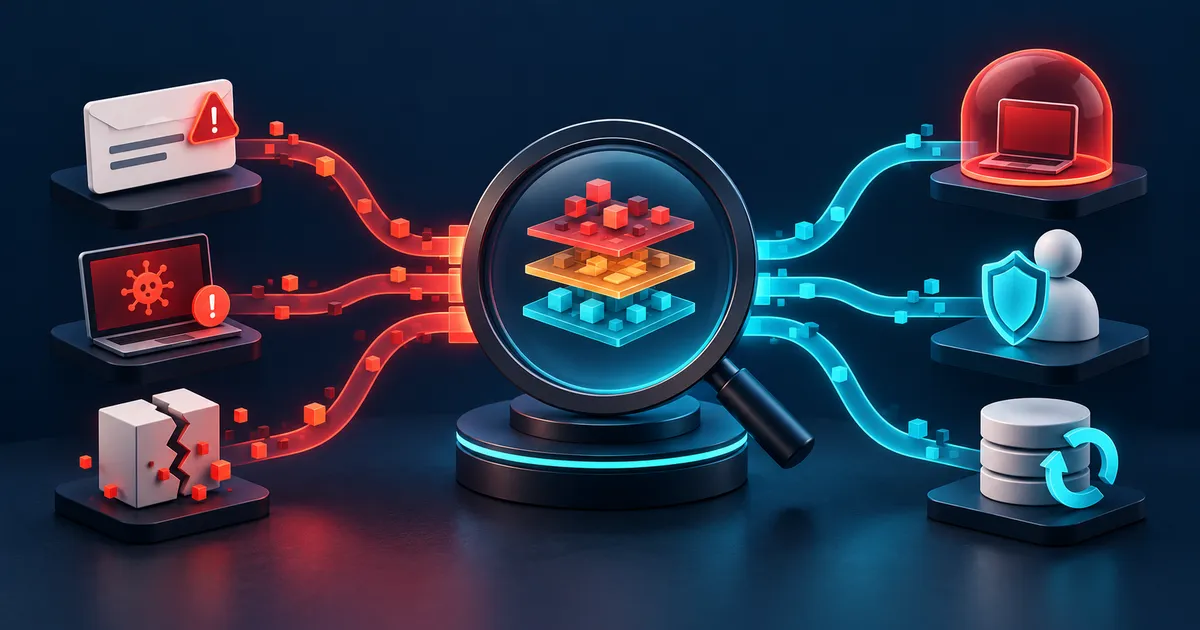
How to respond when a trojan may have run
Stop before granting privileges. Verify whether the publisher offers an official package, check its signature and current reputation, and use a supported alternative when provenance is unclear. Functionality is not evidence that the installer is safe.
Example: a useful download asks for unexpected privileges
A free utility claims to convert files but asks for administrator access, disables security warnings, and comes from a download site rather than the named publisher. The software may work while also installing unwanted or malicious components.
Prove the rebuilt device and accounts are trusted
If the installer ran, disconnect the device when compromise is plausible, preserve alerts and file details, and use a clean device to protect important accounts. Rebuild from trusted media when integrity cannot be established confidently.
Trojan recovery checklist
- Obtain software from the verified publisher or trusted platform store.
- Check signature, publisher identity, version, and support status.
- Use standard user privileges for routine work.
- Keep recoverable backups protected from the active device.
- Document alerts, hashes, paths, and accounts before destructive cleanup.
Interrupt the execution chain
A firewall may block some command-and-control traffic, but it cannot make an intentionally approved malicious installer safe.
A trojan succeeds when a trusted-looking file crosses from download to execution. Add friction at each step: verify the distribution source, inspect the signer and requested privileges, restrict script execution, and use a standard account. Backups should be unreachable to routine malware so recovery does not depend on the affected device.
- Verify the publisher and source before installation.
- Use standard user accounts for daily work.
- Block macros or scripts from untrusted files where feasible.
- Keep backups disconnected or access-controlled.
Scope the recovery
Separate suspicion from confirmed execution. Browser history, download records, file hashes, security alerts, process history, persistence entries, and account events answer different questions. Record them before cleanup. If an unknown program ran with high privilege, a clean reinstall may be safer than trying to prove every system component is untouched.
| Evidence | Immediate action | Next check |
|---|---|---|
| Blocked download only | Delete and report it | Confirm no process executed |
| Unknown program ran | Disconnect the device | Review alerts, processes, persistence, and accounts |
| Credentials may be stolen | Use a clean device to rotate them | Revoke sessions and recovery methods |
| System integrity uncertain | Rebuild from trusted media | Restore selected data, not unknown executables |
Do not rely on one product label
Modern endpoint protection often handles many malware classes rather than a separate anti-trojan product. Evaluate detection evidence, update support, recovery controls, and operational fit instead of a category name.
Choose endpoint protection by current platform support, update health, behavior controls, alert quality, quarantine, and recovery. A product marketed for one malware label may use the same engine as a broader suite. The useful evidence is what it observed and blocked, not whether its name contains the word trojan.
Trojan response mistakes
- Assuming a file is safe because an antivirus scan reports no detection. New, targeted, packed, or low-prevalence files may not be recognized.
- Granting administrator access because installation fails without it, without checking why the program needs system-wide changes.
- Restoring every downloaded executable after a rebuild, which can reintroduce the same installer.
Trojan malware questions
How is a trojan different from a virus?
Trojan describes deceptive delivery or appearance. A virus describes self-replication by infecting other files. One malicious program can have several capabilities and labels.
Can a firewall stop a trojan installation?
A firewall may block some download or command traffic, but it cannot make a user-approved malicious executable trustworthy or undo local actions.
Should I pay for a separate anti-trojan product?
Modern endpoint products commonly address multiple malware classes. Evaluate current evidence, platform integration, updates, behavior controls, and recovery instead of the category name.